
SINOYQX|Why Lunar Photovoltaic Systems Must Rely on an Advanced Materials System
Lunar photovoltaic (PV) systems are not simply “solar panels placed on the Moon.”
They are long-cycle, ultra-reliable, integrated structural energy systems designed for one of the harshest environments known to engineering.
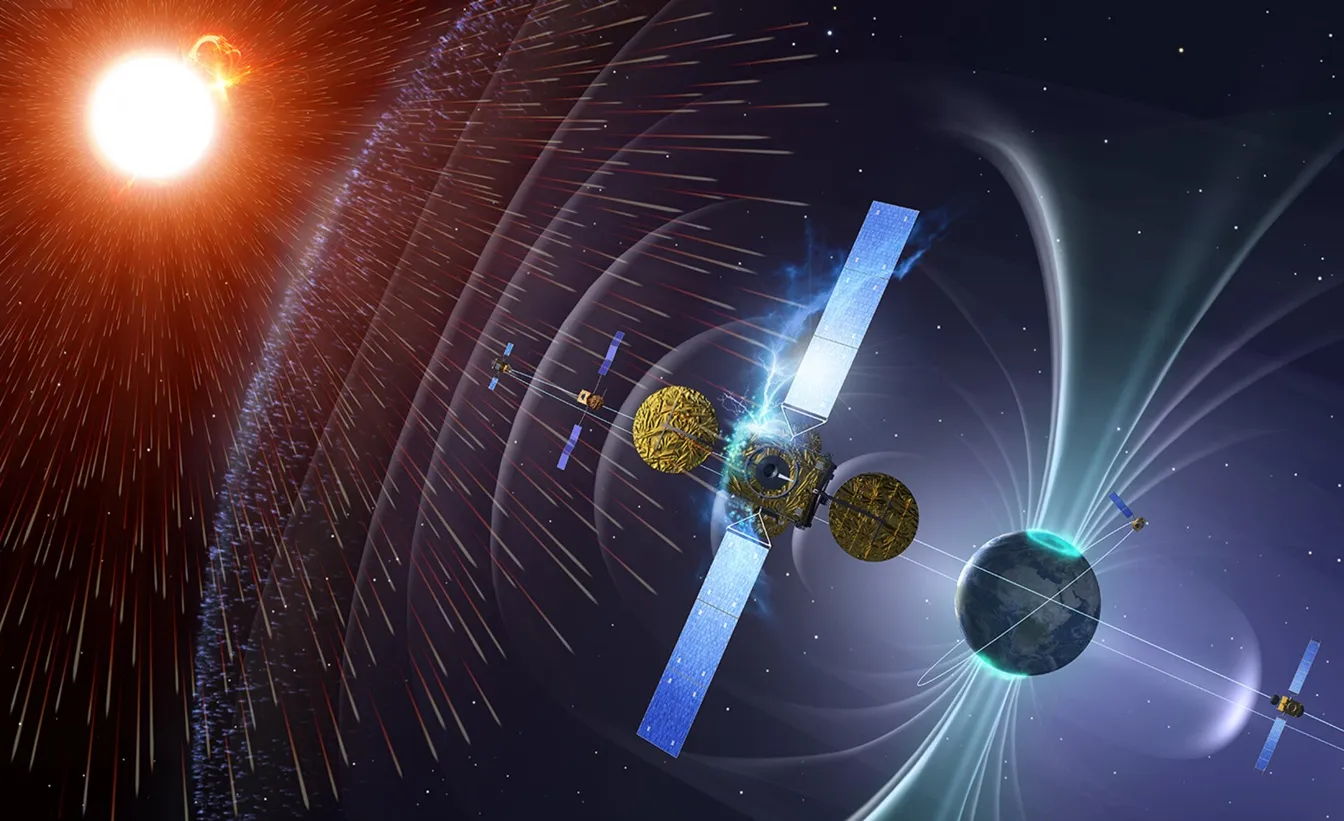
Lunar Energy Systems Must Withstand:
| Challenge | Technical Requirement |
| Temperature | −173°C to +127°C extreme day–night cycling |
| Vacuum | No convective heat dissipation |
| Radiation | Intense cosmic rays & solar wind |
| Micrometeoroid Impact | Continuous high-speed particle exposure |
| Weight Cost | Every kilogram is extremely expensive to transport |
| Long-Term Reliability | 10–20 years of stable operation |
👉 Therefore, a lunar photovoltaic system is fundamentally a:
Structural + Thermal Management + Acoustic Damping + Protection + Lightweight Composite System
—not merely a silicon solar module.
Why Advanced Material Systems Are Essential
On Earth, PV modules rely on atmospheric buffering, convective cooling, and service accessibility.
On the Moon:
- No atmosphere means radiative heat transfer dominates
- Extreme temperature swings cause thermal fatigue
- Radiation accelerates material aging
- Weight constraints redefine structural design priorities
This shifts the engineering paradigm from component optimization to system-level material architecture.
The Potential Role of Melamine Foam in Lunar PV Systems
For aerospace-grade melamine foam — particularly the ultra-light 4 kg/m³ material currently under development by SINOYQX — the alignment with space system requirements is technically compelling.

The current aerospace material specifications:
- Density: 4 kg/m³
- Working temperature: −200°C to +240°C
- Sound absorption coefficient: 0.85
- Intrinsic flame resistance
- Micro-porous lightweight cellular structure
These parameters naturally match space-grade design logic.
① 🌡️ Thermal Management Back Insulation Layer (High Potential Application)
Technical Requirement
Lunar day–night temperature fluctuations are extreme.
Photovoltaic efficiency and electronic reliability are highly temperature-sensitive.
Stabilizing thermal gradients is mission-critical.
Why Melamine Foam Is Relevant
✔ Ultra-low thermal conductivity
✔ Wide temperature tolerance (−200°C to +240°C)
✔ Intrinsic flame resistance
✔ Ultra-light density (4 kg/m³ aerospace advantage)
✔ Structural compliance to reduce thermal stress concentration
In fact, aerospace insulation systems have historically incorporated materials comparable to BASF Basotect® UL for high-performance insulation applications.
SINOYQX’s development path toward ultra-light microcellular structures aligns directly with this system philosophy.
Beyond Insulation: System-Level Integration
Melamine foam is not merely a “thermal block.”
It can function as:
- Thermal buffering layer
- Vibration damping interface
- Micrometeoroid energy absorption buffer
- Lightweight structural filler
- Acoustic dampening layer for internal habitat modules
- Composite sandwich core material
In a lunar energy architecture, materials must serve multiple simultaneous roles to justify launch mass.
This is where advanced material systems become decisive.
Strategic Insight for SINOYQX
The 4 kg/m³ ultra-light aerospace melamine foam is not simply a lighter version of industrial foam.
It represents:
- A structural mass-reduction tool
- A thermal stabilization medium
- A high-reliability aerospace insulation candidate
- A potential component within next-generation extraterrestrial infrastructure
As lunar exploration accelerates under programs led by agencies such as:
- NASA
- European Space Agency
- China National Space Administration
…the demand for ultra-light, high-stability, intrinsically flame-resistant materials will only expand.
Conclusion: Lunar PV Is a Materials Engineering Problem
The future of lunar energy is not determined by silicon efficiency alone.
It will be determined by:
How intelligently we design integrated advanced material systems.
For SINOYQX, aerospace-grade melamine foam is no longer just an acoustic material.
It is a potential enabler of next-generation space infrastructure.
Compliance & Technical Statement
This article discusses potential aerospace application scenarios for advanced melamine foam materials.
Actual use in space systems requires:
- Mission-specific engineering validation
- Full material qualification testing
- Radiation and vacuum compatibility assessment
- Compliance with aerospace certification standards
No space-grade certification claim is implied unless explicitly stated in technical documentation.
About SINOYQX
SINOYQX focuses on:
- Aerospace-grade ultra-light melamine foam
- Micro-porous intrinsic flame-retardant materials
- Advanced thermal and acoustic composite solutions
📧 Email: [email protected]
🌐 Website: www.sinoyqx.com
📍 Chengdu, China