
⚡ Applications of 4kg/m³ Ultra-Light Melamine Foam in the New Energy Sector | SINOYQX
In today’s rapidly advancing new energy industry, materials are no longer just about “insulation” or “noise reduction.” They directly influence system safety, stability, and lifespan. From EV battery packs and energy storage systems to solar PV inverters, the demand for lightweight, flame-retardant, multifunctional materials is stronger than ever.
In this context, SINOYQX has developed 4kg/m³ ultra-light melamine foam, a groundbreaking material offering outstanding thermal-acoustic management and flame resistance, making it the ideal choice for new energy applications.
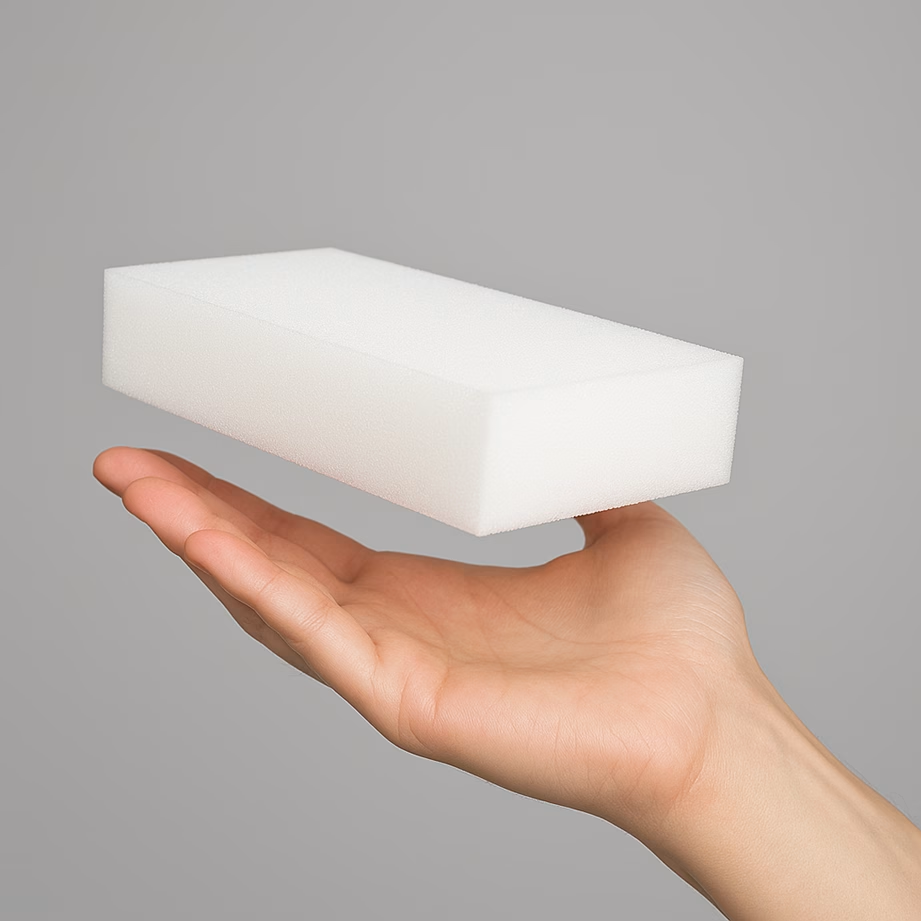
🔋 Energy Storage Enclosure: Thermal & Acoustic Insulation Panels
With the implementation of China’s “dual-carbon strategy,” energy storage deployment is accelerating rapidly. Storage enclosures face challenges such as high heat flux, electromagnetic interference, and operational noise.
- Thermal Management: With a thermal conductivity of λ ≈ 0.030~0.035 W/m·K, SINOYQX melamine foam significantly reduces heat transfer.
- Noise Control: Featuring an absorption coefficient α ≈ 0.85 at mid-high frequencies, it effectively cuts fan and switching noise.
- Composite Solutions: Lamination with aluminum foil or suitable nonwoven facings can be evaluated for lightweight insulation panel assemblies. Compliance with applicable GB/T, UL or IEC requirements must be demonstrated for the complete tested construction.
👉 Ideal for wind, solar, and electrochemical storage stations, enabling energy efficiency and environmental compliance.
🚗 Battery Pack Structure: Safety & Lifespan Assurance
One of the most critical risks for EV and storage batteries is thermal runaway. Materials are vital in delaying, preventing, or mitigating these hazards.
- Thermal Insulation: Grade-specific fire-reaction results may support materials selection, but UL 94 classification of a specimen does not demonstrate containment of thermal runaway or prevent fire spread within a battery pack.
- Electrolyte Compatibility: Any contact with battery electrolyte requires chemical compatibility, electrical safety and abuse testing. Electrolyte absorption must not be presented as a verified thermal-runaway mitigation function.
- Lightweight Advantage: At only 4kg/m³, it adds negligible weight compared to fiberglass or polyurethane, supporting longer EV driving range.
👉 As a candidate new energy battery insulation material, its lightweight and thermal characteristics can be evaluated within an OEM-approved assembly; system safety depends on complete battery validation.
☀ PV Inverters & Power Electronics
As the “brain” of PV systems, inverters require stable and long-term operation.
- Ventilation Noise Control: Foam lining in cooling ducts significantly reduces electronic switching and fan noise.
- Thermal Protection: Prevents external temperature fluctuations from impacting internal components.
- System Safety: Electrical, fire, moisture and thermal reliability must be confirmed through equipment-level tests under the expected operating conditions.
👉 In PV + storage hybrid systems, 4 kg/m³ melamine foam may be assessed as one component of an engineered acoustic or thermal solution; system efficiency, noise and safety require separate verification.
📌 Conclusion
SINOYQX 4 kg/m³ ultra-light melamine foam is a low-density material candidate for acoustic and thermal components in energy storage, EV battery systems and PV inverters. Any effect on equipment service life, fire safety or energy efficiency must be established through product- and system-level verification.
🔗 Learn more:
📞 Contact Information | SINOYQX
📧 Email: [email protected]
📞 Phone / WeChat: +86-13540702776
🌐 Website: www.sinoyqx.com