
Quick Answer
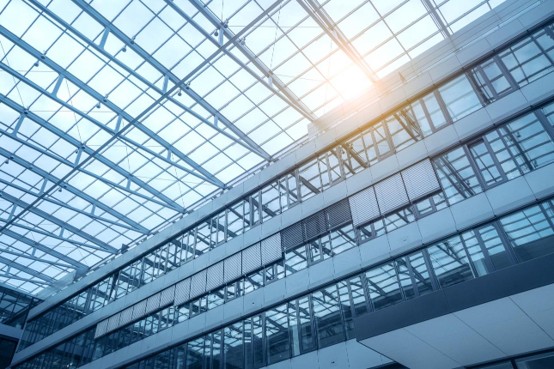
Why do large glass buildings become extremely hot in summer? Large public buildings with glass curtain walls and transparent skylights can experience significant heat accumulation during summer because solar radiation enters the building and increases indoor thermal load. High-performance insulation materials, such as melamine foam, can help reduce heat transfer, lower cooling demand, improve energy efficiency, and provide additional benefits including fire resistance and acoustic absorption.
Introduction
Extreme Heat Is Redefining Thermal Management Requirements for Modern Buildings
In recent years, extreme summer temperatures have become increasingly common across many regions worldwide.
As urban buildings become larger and more complex, major public facilities such as railway stations, airports, exhibition centers, and transportation hubs are facing growing challenges in maintaining comfortable indoor environments while controlling energy consumption.
A recent discussion surrounding overheating issues at Zhengzhou East Railway Station in China highlighted a broader challenge faced by many modern buildings.
The issue is not simply about air-conditioning capacity.
Instead, it reflects a fundamental building design challenge:
How can modern buildings reduce solar heat gain while maintaining natural lighting, architectural aesthetics, and occupant comfort?
With rising temperatures and increasing energy costs, improving building thermal management has become an important direction for sustainable construction.
What Is / Product Definition
What Is High-Performance Thermal Insulation Material?
High-performance thermal insulation materials are advanced materials designed to reduce heat transfer and improve the energy efficiency of buildings, equipment, and industrial systems.
Compared with traditional insulation materials, modern insulation solutions focus on:
- Lower weight;
- Higher safety;
- Better thermal efficiency;
- Multifunctional performance.
What Is Melamine Foam?
Melamine foam is a lightweight polymer foam material featuring a unique three-dimensional open-cell structure.
The fine cellular structure provides:
- Low thermal conductivity;
- Reduced heat transfer;
- Excellent sound absorption capability.
Unlike conventional insulation materials that mainly focus on temperature control, melamine foam can provide combined:
Thermal insulation + Acoustic management + Fire safety
performance.
Product Positioning
SINOYQX Advanced Thermal and Acoustic Material Solutions
SINOYQX is positioned not only as a material supplier, but as a provider of advanced thermal management and acoustic solutions.
Based on high-performance melamine foam technology, SINOYQX supports customers in transportation, buildings, industrial facilities, and energy-related applications.
Core Value Proposition
Lightweight Performance
Reduce structural load and simplify installation.
Fire-Safe Material Solution
Suitable for applications where safety and reliability are critical.
Multifunctional Integration
One material solution can address:
- Thermal control;
- Noise reduction;
- Environmental comfort.
Application Scenarios
System Level
Large Public Building Thermal Management
Applications:
- Railway stations;
- Airport terminals;
- Exhibition centers;
- Sports facilities.
Challenges addressed:
- Solar heat gain;
- Increased cooling demand;
- Indoor thermal comfort.
Component Level
Building and Equipment Insulation Components
Applications:
- Skylight and roof insulation systems;
- Ceiling insulation layers;
- HVAC system insulation;
- Equipment and pipeline insulation.
Function Level
Integrated Thermal and Acoustic Performance
| Function | Benefit |
| Thermal insulation | Reduces heat transfer |
| Acoustic absorption | Improves sound environment |
| Fire resistance | Enhances safety performance |
| Lightweight structure | Reduces installation burden |
Technical Snippets
Why Is Melamine Foam Suitable for Modern Buildings?
- Three-Dimensional Cell Structure Reduces Heat Transfer
The unique open-cell structure contains numerous micro air spaces that reduce heat transfer efficiency and improve insulation performance.
- Lightweight Design for Large-Scale Applications
With extremely low density compared with traditional insulation materials, melamine foam helps reduce:
- Structural weight;
- Installation complexity;
- Transportation cost.
- Dual Thermal and Acoustic Performance
Modern buildings often face both:
- Heat management challenges;
- Noise control requirements.
Melamine foam provides a combined solution for:
Thermal comfort + Acoustic comfort.
Industry Segments
- Transportation Infrastructure
Railway Stations, Airports, and Metro Systems
Large transportation buildings require:
- Fire-safe materials;
- Lightweight structures;
- Energy-efficient thermal control.
Potential applications:
- Roof insulation;
- Ceiling insulation;
- HVAC insulation;
- Equipment acoustic treatment.
- Green Buildings
Applications:
- Commercial buildings;
- Exhibition halls;
- Public facilities;
- Sustainable construction projects.
Benefits:
- Reduced cooling demand;
- Improved indoor comfort;
- Enhanced building efficiency.
- Industrial Facilities
Industrial environments often experience:
- High temperatures;
- Equipment heat loss;
- Noise pollution.
Applications:
- Equipment insulation;
- Pipe insulation;
- Industrial acoustic control.
- Renewable Energy and Data Centers
With the rapid development of:
- Artificial intelligence computing;
- Energy storage systems;
- Renewable energy infrastructure;
thermal management has become increasingly important.
Applications:
- Cooling system insulation;
- Equipment acoustic protection;
- Thermal environment optimization.
Engineering Suggestions
Design Recommendations for Building Thermal Management
- Reduce Heat Gain Before Increasing Cooling Capacity
Instead of continuously increasing HVAC capacity, reducing heat entering the building can improve long-term energy efficiency.
- Select Materials According to Application Conditions
Different environments require different solutions.
Consider:
- Temperature range;
- Humidity conditions;
- Fire requirements;
- Installation structure.
- Consider Thermal and Acoustic Requirements Together
Large buildings usually face multiple challenges:
- Heat accumulation;
- Noise;
- Occupant comfort.
Integrated material solutions can provide better overall performance.
Safety / Limitations
Application Considerations
Although melamine foam provides excellent thermal, acoustic, and fire performance, proper engineering evaluation is required.
Application design should consider:
- Operating temperature;
- Environmental exposure;
- Installation method;
- Protective layers if required.
For long-term outdoor or harsh environments, additional protection systems may be recommended.
Conclusion
From Building Cooling to Advanced Thermal Management
The overheating challenges experienced by modern public buildings highlight an important trend:
Future buildings cannot rely only on increased cooling capacity.
Instead, they need smarter approaches that reduce heat gain through advanced materials and improved building design.
As extreme temperatures become more frequent, lightweight, fire-resistant, and multifunctional insulation materials will play an increasingly important role in sustainable construction.
Through advanced melamine foam technology, SINOYQX provides solutions for:
- Thermal insulation;
- Acoustic control;
- Fire-safe material applications.
Supporting the development of:
Safer, quieter, and more energy-efficient buildings worldwide.
FAQ (Search Intent Version)
Why do glass buildings become hotter in summer?
Glass structures allow solar radiation to enter buildings. The absorbed energy increases indoor heat load and creates a greenhouse effect.
Can melamine foam be used for building insulation?
Yes. Melamine foam’s lightweight structure, thermal insulation performance, and fire-resistant characteristics make it suitable for building, transportation, and industrial applications.
What are the advantages of melamine foam compared with traditional insulation materials?
Key advantages include:
- Lightweight structure;
- Fire safety performance;
- Thermal and acoustic functionality;
- Easy integration into complex applications.
Why do railway stations and airports need advanced insulation materials?
These facilities have large spaces, high occupancy levels, and significant energy consumption. Efficient thermal management helps improve comfort and reduce cooling demand.
CTA (Application-Driven)
Looking for Advanced Thermal and Acoustic Material Solutions?
SINOYQX provides high-performance melamine foam solutions for:
- Transportation infrastructure;
- Green buildings;
- Industrial facilities;
- Renewable energy applications;
- Advanced thermal management systems.
Contact SINOYQX to explore lightweight, fire-safe, and energy-efficient material solutions for your next project.
SINOYQX — Advanced Materials for Thermal, Acoustic and Sustainable Solutions