
Melamine Foam: Thermal Insulation and Fire-Performance Considerations
Fires at industrial and cold-chain facilities highlight the importance of building-level fire safety. Investigations must determine the causes of specific incidents; insulation material selection for cold chain warehouses and buildings should follow applicable fire codes and tested assembly requirements.
Open-cell melamine foam is one option for selected thermal and acoustic insulation tasks. Product selection requires verifiable evidence for fire classification, smoke production, thermal properties, thickness and complete installed system performance.

Melamine Foam: Evaluating Thermal, Acoustic and Fire Performance
- Flame-Test Performance for the Selected Grade
Melamine foam offers superior flame resistance, meeting the stringent B1 flame-retardant standard. Material flame performance should be assessed using applicable test reports for the exact grade and installed configuration. No foam alone can guarantee that a fire will not spread or protect building occupants.
- Fire Smoke and Combustion Products: Testing Required
Smoke and combustion-product behaviour must be established by appropriate tests on the specific material and installed assembly. No polymeric foam should be assumed to emit harmless combustion products; project fire regulations and evacuation requirements take priority.
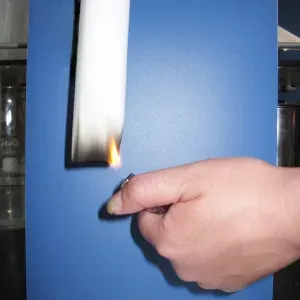
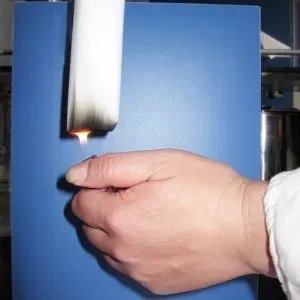

- Excellent Insulation Performance: A Reliable Energy-Saving Ally
With an extremely low thermal conductivity, melamine foam effectively reduces heat transfer, minimizing energy consumption. In applications such as cold chain logistics and building insulation, it helps businesses cut operational costs while contributing to environmental protection efforts.
- High-Temperature Stability for Demanding Environments
Even under high temperatures, melamine foam maintains its stable structure without deformation or melting, making it suitable for challenging environments like cold storage facilities and industrial equipment.
- Lightweight and Easy to Install
Its lightweight and flexible structure allows for easy cutting and installation, significantly reducing labor time and costs. Additionally, its excellent sound-absorbing properties make it an ideal choice for high-quality cold chain warehouses and industrial buildings.
The Hidden Risks of Non-Flame-Retardant Materials
Despite the availability of advanced materials, many facilities still rely on non-flame-retardant insulation like expanded polystyrene foam (EPS/XPS) or regular polyurethane foam (PU). While these materials are cost-effective, they are highly flammable and release large quantities of toxic smoke and molten droplets during combustion, exacerbating fire risks. The causes of any specific fire incident should be taken only from an authoritative investigation report; no conclusion about an individual event is inferred from a generic material comparison.
Applications of Melamine Foam
Melamine foam’s exceptional safety and performance make it a versatile choice for various industries:
- Cold Chain Warehouses: Provides efficient insulation and flame-retardant protection.
- Building Insulation: Meets modern energy-saving and fire safety standards.
- Industrial Equipment: Reliable insulation for high-temperature and complex environments.
- Transportation: Ideal for fire-resistant and insulating interiors in trains, airplanes, and ships.
Select Insulation Using Tested System Performance
Material selection should consider tested fire classification, smoke production, thermal performance, installation details and the applicable building or cold-storage standards. Melamine foam may be evaluated for suitable insulation assemblies but does not replace qualified fire compartments, fire barriers or a building-level fire-safety design.
Discuss grade-specific melamine foam insulation options and the tests required for your project.
About SINOYQX
SINOYQX, a melamine foam manufacturer in the world, is an advanced materials supplier based on natural gas production chain, manufacturing AdBlue, melamine, melamine foam, modified melamine resin, melamine cyanurate, polyphosphate, polyvinyl butyral resin, modified melamine formaldehyde resins, and other chemical products. The annual capacity of AdBlue is 150,000 Litters and 600,000 Tons of Granule; Melamine, 50,000 Tons; Melamine foam, 100,000 m³/year designed capacity, the Melamine Cyanurate is 50,000 Tons. And the Transulate (a thermal insulation material) is 20,000 Sqm, per day.
Contact Us
For more information about SINOYQX melamine foam, reach out to us:
- Email: [email protected]
- Phone: +86-28-8411-1861
Note: Some images and text are sourced from the internet, with copyrights belonging to the original authors. Please contact us if there are any infringement concerns.