
Hydrophobic Melamine Foam: Next-Generation Oil Spill Response Material
Introduction
Oil spills remain one of the most urgent environmental challenges facing the marine and energy industries. Traditional polypropylene absorbents dominate today’s cleanup kits, but they bring drawbacks—bulk waste, single-use limitations, and environmental concerns.
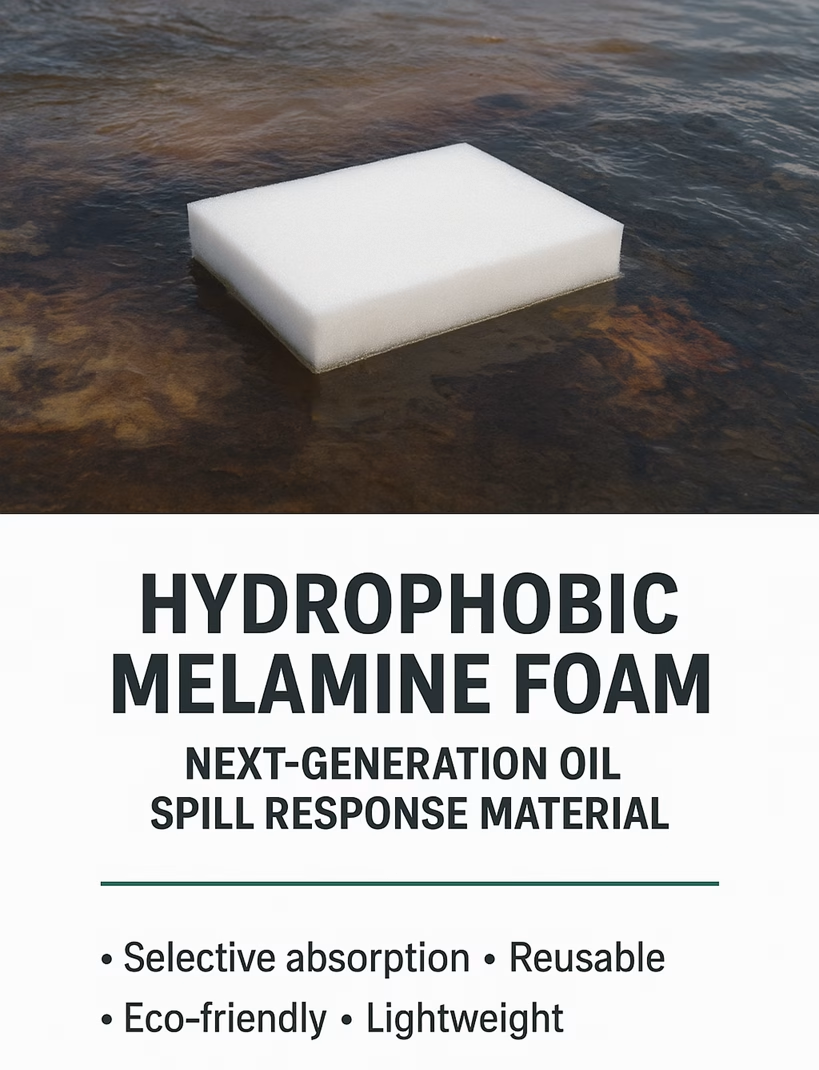
SINOYQX introduces hydrophobic melamine foam, a lightweight, eco-friendly alternative that floats, selectively absorbs oil, and delivers higher recovery efficiency in diverse spill scenarios.
Learn more about SINOYQX melamine foam products →
Why Hydrophobic Melamine Foam Works
Hydrophobic melamine foam combines oleophilicity (oil affinity) with hydrophobicity (water repellence). This unique combination ensures:
- Selective absorption – efficiently removes oil from water surfaces
- Floatability – foam stays on the surface even when saturated
- Versatility – sheets, booms, socks, and pillows for different applications
- Sustainability – reusable cycles possible with squeezing or centrifuging
Comparison: Melamine Foam vs. Polypropylene Absorbents
| Feature | Hydrophobic Melamine Foam | Polypropylene Absorbents |
| Oil Selectivity | High (hydrophobic + oleophilic) | Moderate |
| Floatability | Excellent, even when saturated | Good |
| Reusability | Yes (oil recovery by squeezing/centrifuging) | Rarely reusable |
| Mechanical Strength | Moderate (requires anchoring/frame support) | Higher |
| Environmental Impact | Lower waste, recyclable | High waste, single-use |
| Deployment Options | Pads, socks, pillows, laminated mats | Mostly pads/booms |
| Fire Safety | Requires careful handling when oil-soaked | Flammable as well |
👉 Bottom line: Melamine foam reduces waste, improves eco-credentials, and enables multi-format deployment, while polypropylene remains cheaper but less sustainable.
Case Study: Rapid Harbor Spill Containment
In 2024, a port facility in Southeast Asia experienced a diesel spill near its fueling dock.
- Problem: Traditional pads struggled to contain the thin surface sheen in tidal waters.
- Solution: The response team deployed SINOYQX hydrophobic melamine foam sheets, mounted to a floating HDPE backbone with stainless-steel clips.
- Result:
- Thin oil sheen absorbed within 2 hours
- Pads remained afloat and intact despite wave action
- Foam units were squeezed, reused twice, and safely disposed after saturation
This demonstrated cost savings (fewer absorbents used) and eco-compliance (reduced hazardous waste).
FAQs: Hydrophobic Melamine Foam in Oil Spill Response
- What types of oil can it absorb?
It works best with thin sheens, light-to-medium crude, diesel, gasoline, and refined products. Viscosity affects uptake. - Can the foam be reused?
Yes. Some formats allow oil recovery by squeezing or centrifuging. However, performance decreases after multiple cycles. - Is it safe for marine wildlife?
Yes. Unlike chemical dispersants, the foam is inert, non-toxic, and designed for physical recovery. - How is saturated foam disposed of?
It must be treated as hazardous waste. Disposal options include incineration or fuel recovery, following local regulations. - How do you prevent foam pads from drifting away?
Best practices include anchoring to a floating backbone, using perimeter eyelets with mooring lines, or sewing into tubular socks/booms.
Read full deployment guidelines →
Conclusion
Hydrophobic melamine foam represents the next generation of oil spill absorbents—lightweight, selective, reusable, and environmentally conscious. For ports, offshore platforms, and emergency responders, it offers a powerful complement or alternative to polypropylene pads.
🚢 SINOYQX is ready to support your projects with samples, technical data, and deployment advice.
Contact SINOYQX for product inquiries →
📞 Contact SINOYQX
📧 Email:[email protected]
📞 Tel:+86-13540702776
🌐 site:www.sinoyqx.com