
Quick Answer
As automotive manufacturers face increasing demand for quieter, lighter, and more comfortable vehicles, reliable alternative acoustic insulation suppliers are becoming essential. Transulate™ provides lightweight acoustic and thermal insulation solutions for automotive interiors, supporting OEMs and Tier 1 suppliers with flexible and reliable material solutions.
Why Automotive Manufacturers Need Alternative Acoustic Insulation Suppliers
The Automotive Industry Is Entering a New Acoustic Era
For decades, vehicle noise control was mainly focused on reducing engine and mechanical noise.
Traditional vehicles naturally generated significant engine sounds, which masked many other noise sources inside the cabin.
However, the rapid growth of electric vehicles has changed this situation completely.
Without a combustion engine, EV cabins become significantly quieter.
But at the same time, passengers begin to notice other noise sources that were previously less obvious:
- Road noise
- Tire noise
- Wind noise
- Suspension vibration
- Electric motor high-frequency sounds
- HVAC system noise
As a result, automotive manufacturers are facing a new challenge:
How can vehicles become quieter, lighter, and more comfortable at the same time?
Acoustic Materials Have Become a Key Part of Vehicle Design
Modern vehicle comfort is no longer determined only by engine performance or suspension systems.
Interior acoustic materials have become an important engineering component in:
- Passenger comfort
- Premium vehicle experience
- EV cabin refinement
- Noise, Vibration and Harshness (NVH) performance
Automotive manufacturers and Tier 1 suppliers are increasingly evaluating advanced materials that can provide:
Lightweight Design
Reducing vehicle weight helps improve:
- Driving range of EVs
- Energy efficiency
- Vehicle performance
Effective Sound Absorption
High-performance acoustic materials help control:
- Airborne noise
- Cabin resonance
- High-frequency noise
Thermal Comfort Improvement
Insulation materials also contribute to:
- Temperature stability
- Passenger comfort
- Reduced heat transfer
The Supply Chain Challenge: Why Automotive Companies Need Alternative Suppliers
Automotive programs usually have long development cycles.
Once a material is approved, manufacturers often continue using the same supplier for years.
However, recent global supply chain changes have changed purchasing strategies.
Automotive companies increasingly recognize the importance of:
Supply Chain Flexibility
Dependence on a single supplier may create risks related to:
- Capacity limitations
- Regional disruptions
- Price fluctuations
- Delivery uncertainty
Second Source Supplier Strategy
Many automotive manufacturers and Tier 1 suppliers are now looking for qualified alternative suppliers.
The objective is not simply replacing existing materials.
Instead, companies are seeking:
A reliable second-source partner that can provide consistent quality, technical support, and supply flexibility.
Beyond Cost: The Importance of Alternative Acoustic Solutions
When evaluating a new acoustic material supplier, automotive companies consider more than price.
Key evaluation factors include:
Material Performance
Important parameters include:
- Acoustic absorption performance
- Density
- Thermal conductivity
- Compression behavior
- Flame resistance
Customization Capability
Automotive applications often require:
- Different thicknesses
- Different densities
- Custom shapes
- Laminated structures
- Specific processing requirements
Stable Global Supply
Automotive production requires:
- Reliable capacity
- Consistent quality
- Long-term cooperation
Transulate™: A Reliable Alternative Solution for Automotive Acoustic Applications
SINOYQX Transulate™ is designed to support automotive manufacturers and Tier 1 suppliers seeking lightweight acoustic and thermal insulation solutions.

The material platform provides:
Lightweight Acoustic Performance
Designed for applications requiring:
- Efficient sound absorption
- Weight reduction
- Space optimization
Flexible Product Customization
Transulate™ can be developed according to different automotive requirements, including:
- Thickness adjustment
- Density optimization
- Shape customization
- Composite structures
Automotive Interior Applications
Potential applications include:
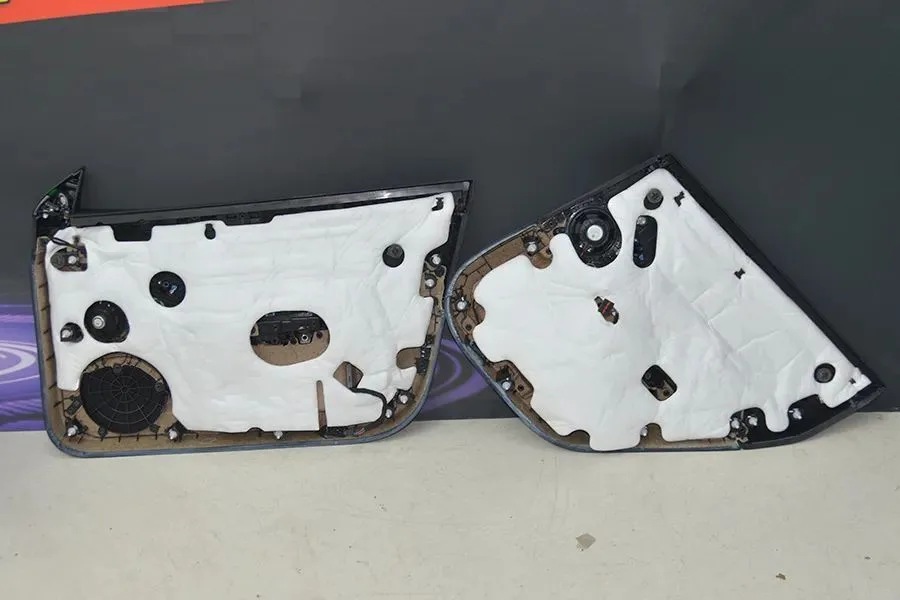
Door Panels
Reducing:
- Road noise
- External sound transmission
Roof Liners
Improving:
- Cabin acoustic comfort
- Thermal insulation
Floor Carpet Systems
Controlling:
- Road vibration noise
- Tire noise
Trunk Interior
Reducing:
- Rear cabin noise
Hood and Firewall Areas
Supporting:
- Engine compartment insulation
- Heat protection
Supporting the Transition Toward Next Generation Vehicles
The future automotive industry will continue moving toward:
- Electric vehicles
- Lightweight structures
- Higher passenger comfort expectations
- More flexible global supply chains
This transition requires not only better vehicles, but also better material partnerships.
Automotive manufacturers need suppliers who understand:
- NVH engineering requirements
- Lightweight design challenges
- Global supply expectations
Conclusion
The automotive acoustic insulation market is changing.
As vehicles become quieter and lighter, manufacturers are looking beyond traditional supply models and searching for reliable alternative material partners.
A qualified second-source supplier can help automotive companies achieve:
- Greater supply chain flexibility
- Material innovation
- Cost optimization
- Long-term production security
Transulate™ provides lightweight acoustic and thermal insulation solutions for next-generation automotive interiors, helping global automotive manufacturers build quieter, lighter, and more comfortable vehicles.
Suggested CTA
Looking for an alternative automotive acoustic insulation supplier?
Contact SINOYQX to discuss your automotive NVH material requirements and request technical samples.