
4kg/m³ Ultra-Light Melamine Foam: Lightweight Acoustic & Thermal Solution for Rail Transit | SINOYQX
- Challenges in Rail Transit Materials
Modern high-speed rail and metro systems face three critical challenges:
- Comfort vs. High-Speed
- At speeds above 300 km/h, wheel-rail and aerodynamic noise rise sharply.
- Cabin noise levels can reach 75–85 dB(A), compromising passenger comfort and driver safety.
- Energy Efficiency vs. Lightweight Design
- HVAC systems account for 30–40% of total train energy consumption.
- Reducing vehicle weight by just 1% can cut overall energy use by 0.5–0.7%.
- Fire Safety vs. Environmental Regulations
- Materials must comply with EN 45545-2, DIN 5510, NFPA 130 standards.
- They should be halogen-free, low smoke, and non-toxic during fire events.

- Material Comparison
| Material Type | Density Range (kg/m³) | Acoustic Performance | Thermal Performance | Fire Resistance | Limitations |
| Melamine Foam (4kg/m³) | 4 | Wideband α ≈ 0.85 (mid-high freq) | λ ≈ 0.030–0.035 W/m·K | UL94 V-0, self-extinguishing | Slightly higher cost but superior all-round performance |
| PU Foam (Open-Cell) | 10–40 | Moderate | Average | Flammable | Aging, poor fire safety |
| Glass Wool | 10–80 | Excellent | Excellent | Non-combustible | Heavy, dust issues, installation difficulty |
| XLPE Foam | 25–80 | Poor | Excellent | Flammable/FR grades available | Poor sound absorption |
| PET Fiber (Black) | 15–50 | Moderate | Average | Flammable (requires FR treatment) | Limited durability, lower fire safety |
📌 Conclusion:
- PU foam and PET fiber are low-cost but insufficient for modern safety and durability requirements.
- Glass wool performs well acoustically and thermally but adds excessive weight.
- SINOYQX 4kg/m³ melamine foam uniquely combines ultra-light density, wideband sound absorption, low thermal conductivity, and intrinsic flame resistance—making it the most balanced choice for rail transit.
- Application Areas in Rail Transit
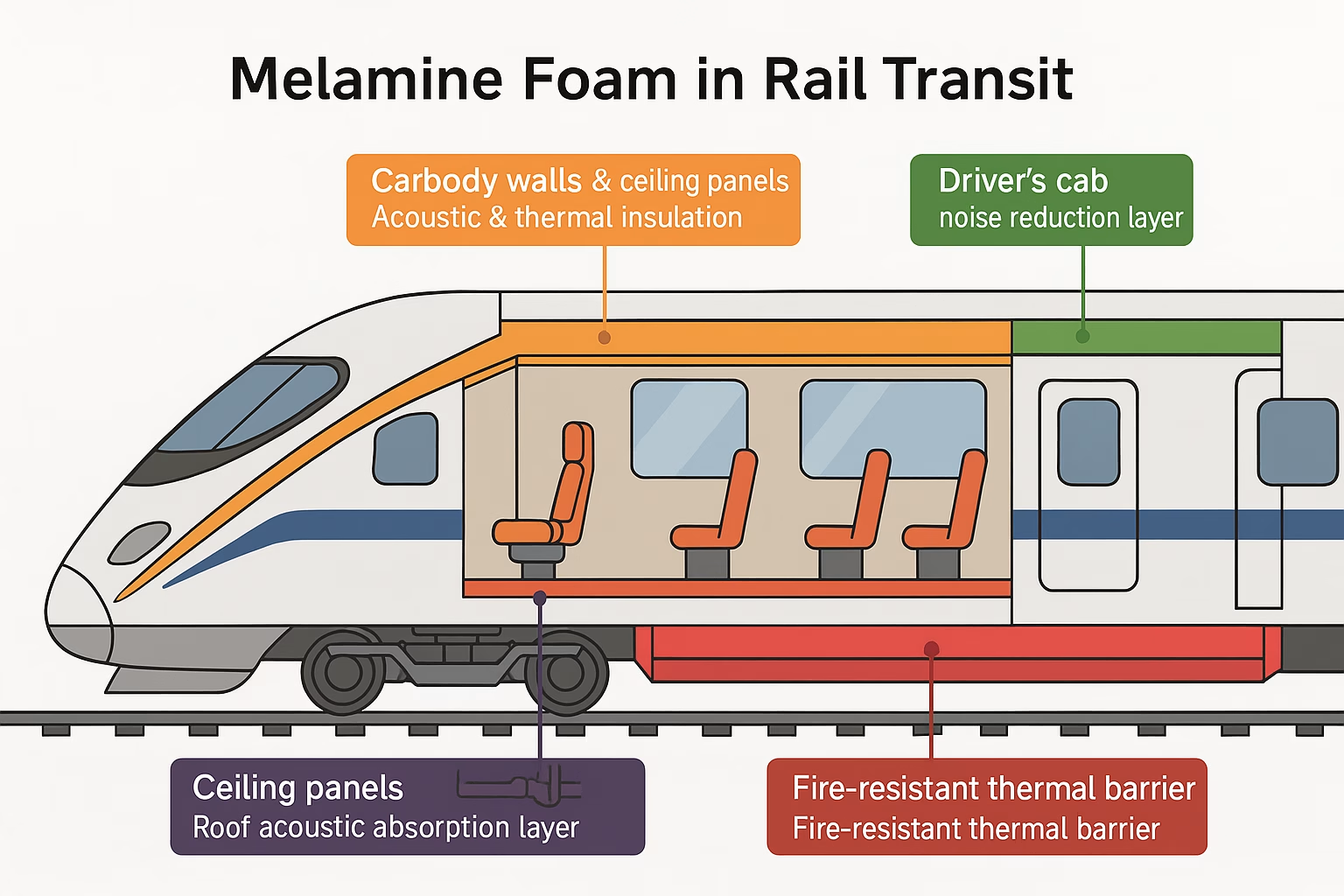
- Carbody Walls & Ceilings
- Reduces wheel-rail and aerodynamic noise by 5–8 dB(A).
- Enhances HVAC efficiency by lowering heat transfer, cutting energy use by 5–10%.
- Driver’s Cab Noise Reduction
- Applied in walls, flooring, and ceiling panels.
- Reduces interior cab noise by 6–10 dB(A), improving safety and reducing fatigue.
- Underframe & Power Compartments
- Operating range: -200°C to +240°C.
- UL94 V-0 flame resistance, compliant with EN 45545-2 HL3 standards.
- Provides dual fire protection + thermal barrier for sensitive equipment.
- Seats & Interior Components
- Replaces traditional PU foam with 20–30% weight reduction.
- No toxic smoke emissions during fire, ensuring passenger safety.
- Industry Trends & Future Outlook
- Tighter Regulations → Global standards (EN 45545, CRCC, NFPA 130) are increasingly strict.
- Material Evolution → PU and PET fibers are being phased out in premium applications.
- Future Development:
- Aluminum-laminated composites for added thermal protection.
- Nonwoven composites for hybrid acoustic-structural solutions.
- Compliance with RoHS/REACH certifications for global environmental markets.
SINOYQX melamine foam is not just a replacement material—it is a game-changing solution that pushes rail transit toward safer, lighter, and more energy-efficient systems.
📌 Contact Information
SINOYQX
📧 Email: [email protected]
📞 Phone / WeChat: +86-13540702776
🌐 Website: www.sinoyqx.com